Radar level gauges are supporting desulfurization and dust removal systems for high-precision intelligent level monitoring instruments.
They are mainly installed on the top of equipment such as desulfurization slurry silos, ash hopper silos, large circulating water pools, wastewater storage tanks, and powder storage silos.
d on the high-frequency radar wave ranging principle, they provide non-contact, real-time, and continuous monitoring of the level height of liquids, powders, and gran
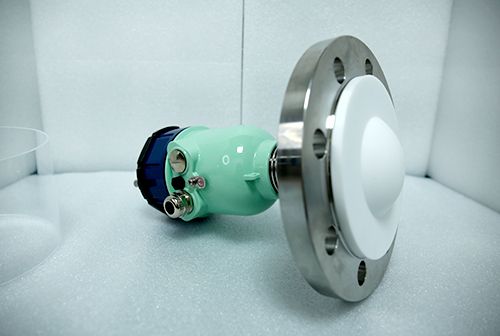
They can accurately provide real-time data on material and liquid levels, providing precise data support for material conveying, slurry replenishment, pump start/stop, and silo anti-blockage and anti-overflow measures. They are a core supporting instrument for the automation and high-precision level control of dust removal and desulfurization systems.
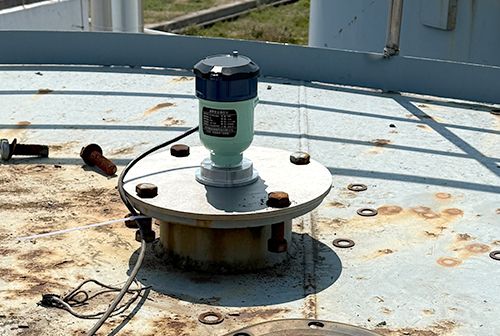
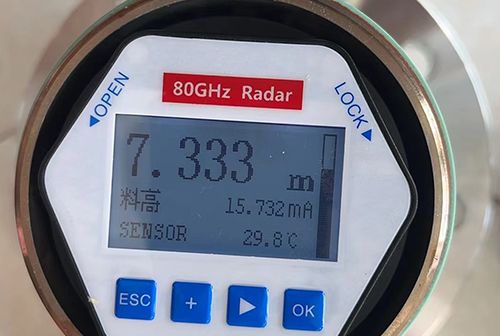
Utilizing high-frequency radar detection technology, they offer high measurement accuracy, fast response speed, and extremely strong penetration ability, easily penetrating dust, water mist, steam, and foam layers. This completely solves the measurement inaccuracies of ultrasonic and magnetic float instruments in dusty, foggy, and foamy conditions, making them suitable for stable monitoring in complex and harsh operating conditions.
The entire measurement process is non-contact, with the probe never contacting the slurry, water, or dusty materials. There is no wear, no clogging, and no risk of corrosion. It can withstand long-term operation in desulfurization alkali-corroded slurries, high-viscosity media, and high-dust powder conditions, making its durability far superior to contact-type level instruments.
It exhibits excellent measurement stability, unaffected by temperature, air pressure, humidity, liquid level fluctuations, or material drop. There is no data drift or numerical fluctuation, maintaining accurate and stable level data feedback regardless of static storage or dynamic feeding/discharging conditions.
It supports 4-20mA analog and digital signal transmission, seamlessly integrating with PLC and DCS control systems to achieve automatic high/low level alarms, equipment-linked start/stop, and quantitative material replenishment. This fully automated control significantly improves the intelligent operation level of the desulfurization and dust removal system.
The entire machine boasts a high industrial protection rating, with a dustproof, moisture-proof, explosion-proof, electromagnetic interference-resistant, and vibration-resistant design. It is suitable for harsh environments with high dust levels, humidity, and complex electrical systems, and can operate continuously for 24 hours with an extremely low failure rate.
Widely applicable to level and material monitoring scenarios such as desulfurization slurry storage tanks, large circulating water pools, wastewater storage tanks, dust collector hoppers, powder storage silos, and material towers. Primarily used in flue gas desulfurization and dust removal processes in thermal power generation, thermal heating, metallurgical sintering, cement kiln tail, chemical tail gas, and waste incineration, especially suitable for complex monitoring scenarios involving high dust levels, fogging, bubbling, high corrosion, and large tanks with deep material levels.
The equipment comes standard with a radar main unit, high-frequency probe, fixed flange, wiring protection components, and installation accessories, offering strong completeness, convenient installation, and wide versatility. Supports multiple specifications including conventional, corrosion-resistant, explosion-proof, and high-temperature options, adaptable to tanks and silos under different pressure, temperature, and corrosive conditions, and compatible with new and upgraded desulfurization and wet electrostatic precipitator systems. With no easily damaged mechanical parts, it requires no frequent calibration or maintenance; only periodic cleaning of dust deposits on the probe surface is needed, resulting in extremely low operation and maintenance costs.
Radar level gauges are designed for accurate measurement under complex working conditions and stable operation without maintenance. They are the core instrument for high-precision level control in dust removal and desulfurization. They can make up for the shortcomings of traditional level gauges in measuring dust, mist, and corrosive conditions. The cleanliness of the probe and the stability of the signal need to be checked regularly to ensure the accuracy and reliability of the automated linkage of the system.

We welcome users to cooperate with us sincerely!
Contact Us



 English
 daniel@jrcytech.com

 86 13127365597