The mixing tank a core slurry preparation and reaction storage device in wet desulfurization systems and wastewater treatment systems.
It is mainly used for limestone slurry preparation, reagent dissolution and neutralization, desulfurization wastewater sedimentation and blending, and circulating slurry buffering.
The equipment integrates the tank body, mixing device, feeding port, overflow port, drain port, and supporting pipelines.
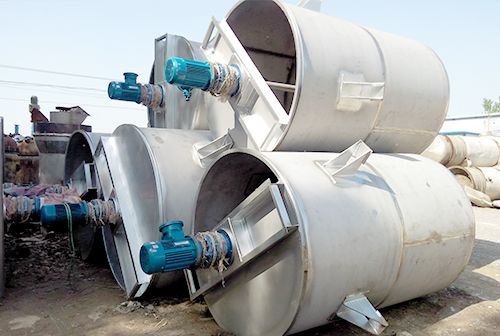
Through continuous stirring by the built-in agitator, lime powder, desulfurization agents, and water are thoroughly mixed and dissolved to form a uniformly concentrated alkaline desulfurization slurry, providing a stable material source for the desulfurization tower spray reaction. It effectively solves problems such as uneven powder dissolution, slurry stratification and sedimentation, low reagent utilization, and large fluctuations in reaction conditions, ensuring a stable slurry supply and balanced acid-base reaction for the entire desulfurization system. It is a key supporting tank device for the initial slurry preparation and stable operation of the wet desulfurization system.
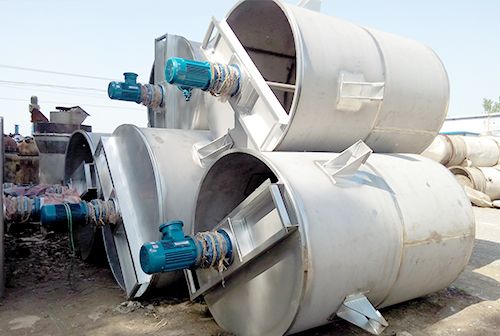
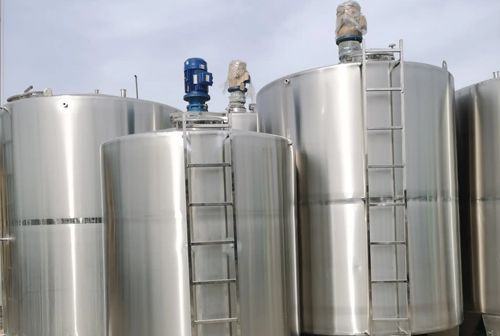
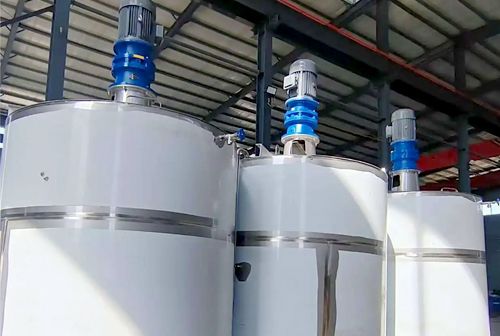
Equipped with highly efficient mixing and pulping capabilities, and featuring a dedicated corrosion-resistant stirring device, the stirring area is wide-ranging and eliminates dead zones and siltation. It can quickly disperse powder materials, promote full dissolution, and prevent bottom settling, scaling, clumping, and slurry stratification, maintaining a consistently uniform slurry concentration and stabilizing the basic operating conditions for desulfurization reactions.
The tank body is constructed from corrosion-resistant materials such as carbon steel lined with rubber, fiberglass, and stainless steel. It is resistant to acid and alkali corrosion, slurry erosion, and aging, making it suitable for long-term storage and mixing of complex media such as lime slurry, acid and alkali agents, and corrosive wastewater. The tank body is rust-resistant, leak-proof, and has a long service life.
The tank structure is scientifically and rationally designed with high volume utilization. Equipped with overflow protection, bottom drainage, and sealed feeding functions, it effectively prevents slurry overflow and impurity accumulation, facilitating easy drainage and tank cleaning, pressure stabilization, and adaptability to multiple operating modes, including continuous pulping and intermittent storage.
Equipped with an energy-saving and corrosion-resistant stirring drive system, it boasts ample transmission torque, stable operation, low noise, and low energy consumption. Supporting frequency conversion speed regulation, the stirring speed can be adjusted according to the powder feed rate and slurry concentration, ensuring on-demand mixing and slurry preparation, significantly improving the utilization rate of reagents and powders, and reducing desulfurization operating consumable costs.
The entire system exhibits excellent sealing performance, with tight seals at the feed inlet, pipe outlet, and inspection port, effectively preventing slurry evaporation, dust overflow, and water vapor leakage, improving the workshop working environment. It also prevents external impurities from contaminating the slurry, ensuring the purity and reaction stability of the desulfurization slurry, and enabling continuous and stable slurry preparation operations 24 hours a day.
Widely applicable to wet desulfurization systems for limestone and lime slurry preparation and storage, acid-base neutralization reagent dissolution and preparation, desulfurization wastewater pretreatment, circulating slurry buffering, and other operating conditions. Primarily used in flue gas desulfurization projects for thermal power generation, heating, metallurgical sintering, cement kiln tail, chemical tail gas, waste incineration, and biomass combustion, this equipment is an indispensable core tank for the initial pulping, reagent preparation, and water pretreatment stages of desulfurization systems.
The equipment comes standard with a corrosion-resistant tank, vertical/side-mounted agitator, sealed feed port, overflow assembly, bottom drainage structure, pipe connections, and a fixed base. It is a complete set, easy to install on-site, and widely compatible. Tank volume, corrosion-resistant materials, and agitator specifications can be customized according to the desulfurization system's air volume, pulping requirements, and media corrosivity. It supports various models, including standard, explosion-proof, and high-temperature resistant models, and is compatible with both new and upgraded desulfurization and dust removal systems. Daily maintenance is simple, requiring only periodic cleaning of tank bottom scale, inspection of agitator seals and operating status, and maintenance of transmission components. Long-term maintenance costs are low, and the equipment operates stably.
The mixing tank is mainly used for uniform slurry preparation, reagent dissolution, and pressure stabilization of material storage, providing a continuous supply of qualified reaction slurry to the desulfurization system. Scale buildup in the tank, agitation failure, and seal leakage can lead to uneven slurry concentration, fluctuations in the desulfurization reaction, and exceeding of the outlet standard. Regular scale removal, maintenance, and upkeep of the agitation system are required to ensure the stable and efficient operation of the desulfurization slurry preparation process.

We welcome users to cooperate with us sincerely!
Contact Us



 English
 daniel@jrcytech.com

 86 13127365597