The filter press is a core solid-liquid separation device in a desulfurization and dust removal system, primarily used for dewatering and drying desulfurization slurry, wastewater sedimentation sludge, and dust-laden industrial wastewater.
During desulfurization system operation, gypsum slurry, sedimentation residue,
and turbid wastewater are filtered under high pressure by the filter press, achieving rapid separation of mud and water,
converting the liquid slurry into solid dry slud
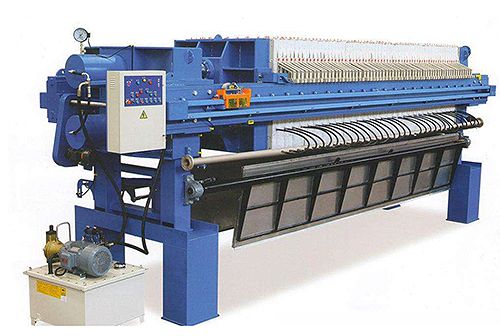
It effectively solves problems such as turbid desulfurization wastewater, residue accumulation, high slurry water content, and on-site messiness, realizing the resource utilization of desulfurization byproducts and wastewater recycling, significantly reducing solid waste treatment costs and water consumption. It is a key supporting equipment for wet desulfurization systems to achieve environmental compliance, reduce residue, and increase energy efficiency.
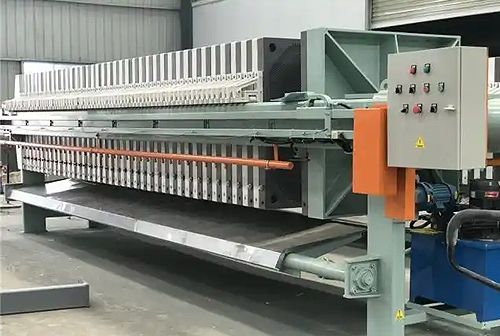
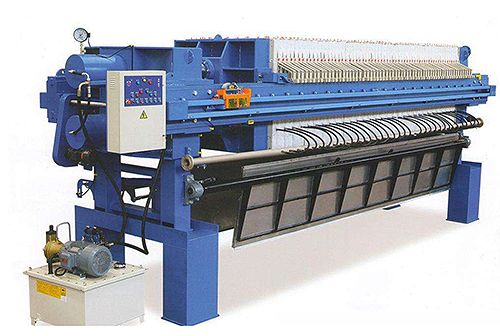
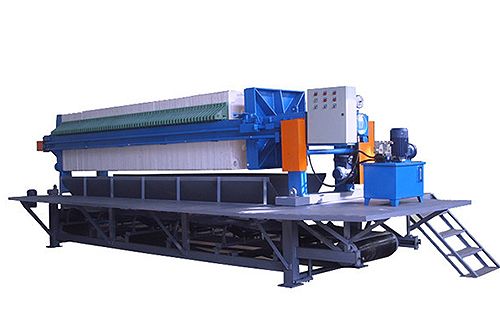
Excellent solid-liquid separation effect. Utilizing the high-pressure compression filtration principle, it can quickly trap gypsum particles, dust impurities, and sludge sediments in the slurry. It boasts high dewatering efficiency, producing sludge cakes with low moisture content, regular shape, and good drying effect, facilitating stacking, transportation, and resource utilization.
The filter plates and filter cloths are made of wear-resistant and corrosion-resistant materials, resistant to acid and alkali corrosion, slurry erosion, and clogging. They are suitable for long-term operation in desulfurization processes involving highly corrosive, high-solids-content, and highly viscous gypsum slurries and wastewater sludge. They are not easily damaged or aged, making them suitable for long-term continuous filtration operations.
The equipment adopts a fully automatic hydraulic pressing and automatic plate unloading structure. The pressing force is uniform and stable, and the pressure relief and unloading are smooth. The high degree of automation allows for automatic feeding, automatic pressing, automatic unloading, and automatic cleaning in a closed-loop operation, requiring no frequent manual intervention and suitable for unattended operation.
With a high water recycling rate, the filtered water is clear and free of impurities, and can be directly returned to the desulfurization slurry tank and circulating water tank for reuse, effectively saving production water, reducing wastewater discharge, meeting environmental protection and water-saving production requirements, and reducing system operating energy consumption and water costs.
The machine has a robust structure, low operating noise, and a low failure rate. The hydraulic system operates smoothly with sufficient pressure, and the plates and frames fit tightly without leakage or material spillage. It can operate intermittently or continuously for 24 hours, suitable for high-load industrial desulfurization waste residue treatment conditions.
Widely applicable to wet desulfurization systems for gypsum slurry dewatering, wastewater and sludge drying, and dust removal wastewater solid-liquid separation. It is mainly used in flue gas desulfurization projects such as thermal power generation, thermal heating, metallurgical sintering, cement kiln tail, chemical tail gas, waste incineration, and biomass combustion. Specifically designed for dewatering and reducing the volume of desulfurization gypsum, acidic sludge, and dust-containing wastewater, it is an essential piece of equipment for the resource utilization of waste residue and wastewater recycling in desulfurization systems.
The equipment comes standard with a complete frame, corrosion-resistant filter plates, high-density filter cloth, hydraulic drive system, automatic plate pulling assembly, electrical control system, and piping accessories. It is a complete set, easy to install, and widely compatible. It supports manual, semi-automatic, and fully automatic models, and can be matched with filter presses of different areas and specifications according to desulfurization slurry production, sludge concentration, and treatment conditions. It is compatible with both new and upgraded desulfurization and dust removal systems. Daily maintenance is simple, requiring only periodic cleaning of the filter cloth, checking hydraulic pressure, tightening connections, and replacing worn parts. Long-term maintenance costs are low, and the equipment is highly stable.
The filter press is primarily used for desulfurization slurry dewatering, sludge drying, and water recycling. It is a core supporting equipment for solid waste reduction and water conservation in desulfurization systems. Filter cloth clogging, filter plate leakage, and insufficient hydraulic pressure will lead to poor dewatering effect and slurry leakage. Regular cleaning, maintenance, and equipment inspection are necessary to ensure efficient and environmentally friendly operation of the desulfurization system's waste treatment.

We welcome users to cooperate with us sincerely!
Contact Us



 English
 daniel@jrcytech.com

 86 13127365597