The electromagnetic pulse valve is a core pneumatic control component of the pulse cleaning system in a baghouse dust collector, often referred to as the cleaning heart of the dust collector.
Installed on the jet duct of the dust collectors air manifold,
it opens instantaneously via an electromagnetic signal, releasing high-pressure airflow to instantly spray high-pressure air into the filter bags, shaking off dust adhering to the filter bag surface and achieving rapid filter bag cleaning
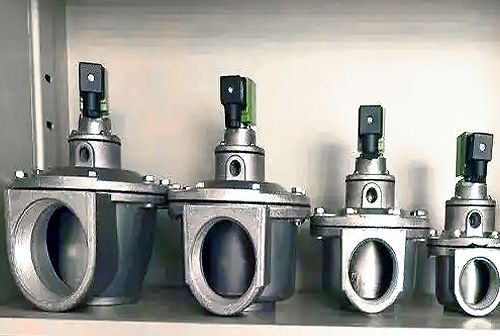
It features fast response, strong pulse force, and stable and reliable operation, making it a key component ensuring continuous low-resistance, high-airflow, and high-efficiency operation of baghouse dust collectors. It is widely used in various pulse-type baghouse dust collectors.
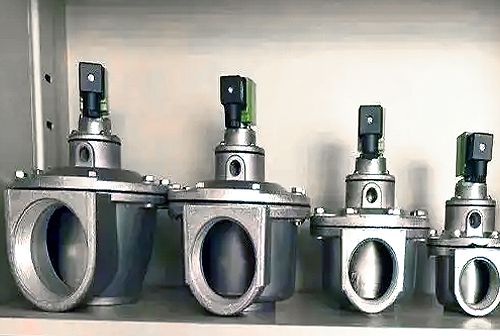
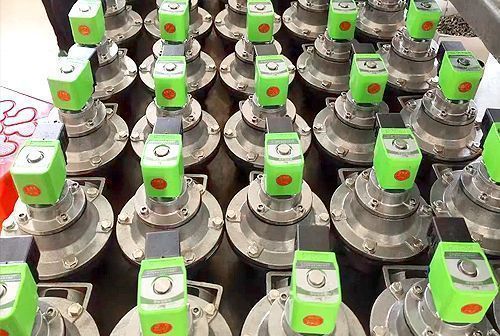
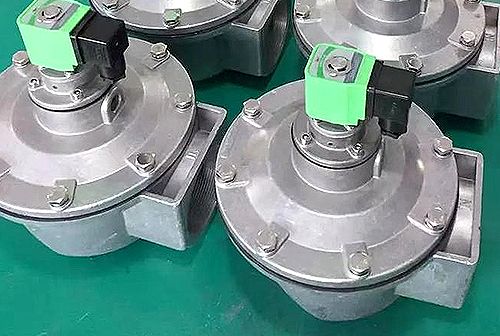
It possesses extremely fast electromagnetic induction triggering capability, sensitive pulse response, and strong instantaneous pulse, capable of instantly releasing high-pressure airflow. It provides sufficient cleaning force and good penetration, effectively removing surface and deep dust accumulation from the filter bags, preventing filter bag caking, clogging, and increased resistance, and stabilizing the dust collection airflow of the equipment.
The valve body is made of high-precision die-cast aluminum alloy, integrally molded, compact in structure, high in strength, and not easily deformed. It is resistant to air pressure impact and fatigue, allowing for long-term, frequent start-stop operation, and is suitable for 24-hour continuous dust removal in industrial equipment.
It features a built-in high-quality diaphragm assembly and precision spring structure, ensuring excellent sealing performance, precise return, no air leakage or cross-contamination, and good pressure holding effect. This effectively reduces air pressure loss in the air tank, saves air compressor energy consumption, and improves the stability of the entire dust removal system.
The operating voltage is compatible with conventional industrial control standards. The coil has low power consumption, low heat generation, and strong anti-interference capabilities, making it less prone to coil burnout and malfunctions. It is suitable for harsh industrial environments such as dust, humidity, and vibration, with an extremely low failure rate.
The standardized universal interface design allows for simple and quick installation and disassembly, strong interchangeability, and no need for complex debugging. It is compatible with various dust removal control cabinets for pulse signal control and can accurately match automatic cyclic dust removal programs.
Widely compatible with various pulse bag dust collectors, single-unit bag dust collectors, silo top dust collectors, and industrial powder recovery dust removal equipment. Suitable for various dry dust collection applications in woodworking, hardware grinding, mining, cement, building materials, chemical, grain, metallurgy, and textile industries, this system can be installed in multiple configurations including right-angle, submerged, and straight-through types.
The equipment comes standard with a complete valve body, solenoid coil, diaphragm assembly, spring, and sealing accessories. Its simple structure, universal parts, and convenient maintenance are key features. The only vulnerable component is the diaphragm, which can be replaced without disassembly or modification, resulting in extremely low maintenance costs. It supports various specifications including standard atmospheric pressure, high pressure, high temperature, and moisture resistance. Matching models can be selected based on the equipment's air tank pressure, pulse frequency, and operating environment, ensuring full compatibility with both new and old pulse dust collectors.
The solenoid pulse valve is the core control component of the pulse cleaning system. Its sensitivity and sealing directly determine the cleaning effect. Prolonged use may lead to diaphragm aging and leakage, as well as weak pulse jets. Regular checks of air pressure sealing and operational status are necessary, along with timely replacement of vulnerable components to ensure stable and compliant operation of the dust collector.

We welcome users to cooperate with us sincerely!
Contact Us



 English
 daniel@jrcytech.com

 86 13127365597